
Roof leaks aren’t just annoying ,they’re expensive, stressful, and usually show up at the worst possible time. If you live in Troy, NY, you’ve probably noticed that roofing problems hit a little differently here than in many other places. Between fast weather changes, freeze-thaw cycles, older housing stock, and winter snow loads, roofs in Troy take a beating.
The good news: most leaks are preventable. The bad news: most homeowners don’t spot the warning signs until water is already inside.
This guide breaks down why Troy roofs leak so often, what’s really going on above your ceiling, and exactly how you can reduce the chances of dealing with a leak ,especially during winter storms and heavy rain.
The Troy, NY Reality: Roofing Is Tough Here
Troy sits in a region where the weather doesn’t play fair. You can get rain today, freezing temps tomorrow, snow next week, and a warm-up that melts everything, then refreezes ,overnight.
That constant shift is brutal on roofing systems because materials expand and contract repeatedly. Over time, that movement loosens nails, cracks seals, separates flashing, and opens tiny gaps that let water in.
If you’re wondering why your neighbor’s roof “looks fine” but still leaks, it’s because leaks often start as small failures that only show under specific conditions—like wind-driven rain, ice dams, or clogged drainage.
Freeze-Thaw Cycles: The Leak Machine You Can’t See
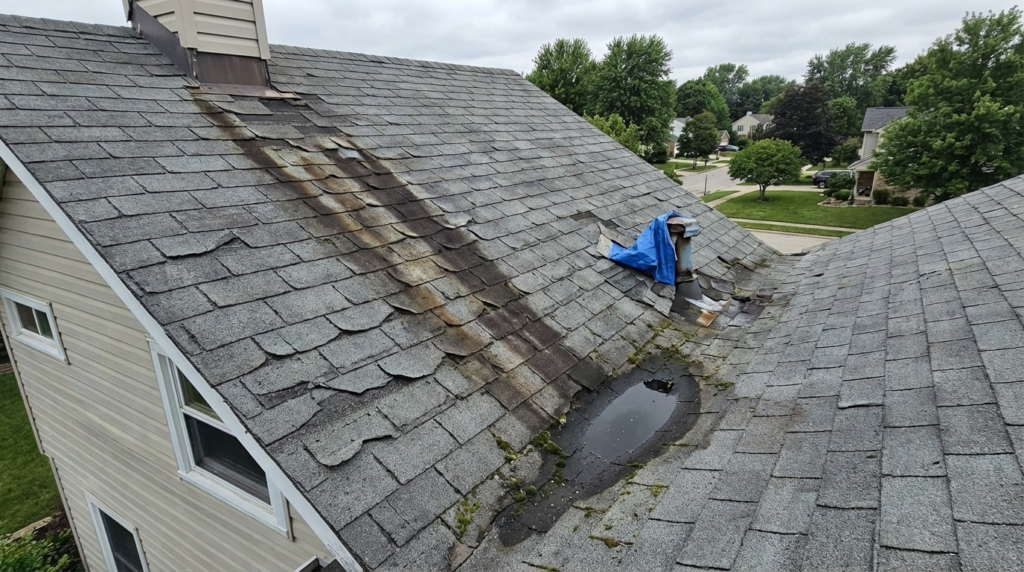
One of the biggest reasons Troy homeowners struggle with leaks is the freeze-thaw cycle. Here’s what happens:
- Water gets into a tiny gap (around a nail, seam, flashing, or shingle edge)
- Temperature drops below freezing
- The water expands into ice
- That expansion widens the gap
- Then it melts and flows deeper into the roof system
Repeat that 30–60 times over winter and you’ve basically got a slow-motion roof failure happening right over your head.
This is especially common around:
- chimneys
- valleys
- skylights
- vents
- roof-to-wall transitions
These are the “stress zones” where Troy roofs typically start leaking first.
Ice Dams: Troy’s Most Common Winter Leak Trigger
If you’ve seen a thick ridge of ice along the edge of a roof, you’ve seen an ice dam. And if you’ve had water stains on your ceiling after snow, there’s a good chance an ice dam was involved.
What causes ice dams?
Ice dams form when:
- Heat escapes from the house (usually through the attic)
- Snow on the upper roof melts
- The melted water runs down to the colder eaves
- It refreezes at the roof edge and builds up ice
- More meltwater backs up behind that ice
- Water gets forced under shingles and into the roof
Ice dams don’t just “happen” because it snows. They happen because of insulation and ventilation issues inside the home.
Why Troy homes are prone to ice dams
Many Troy homes ,especially older ones, have:
- uneven insulation
- attic air leaks
- blocked soffit vents
- older roof systems without modern ice-and-water barriers
That combination is a perfect recipe for winter leaks.
Older Homes, Older Roof Designs: Troy’s Architecture Has a Downside
Troy has a lot of charm—historic homes, older neighborhoods, classic building styles. But older construction often comes with roofing challenges like:
- complicated rooflines (more valleys, intersections, and flashing points)
- older or modified chimneys
- additions built at different times with different roof transitions
- outdated ventilation systems
- older decking that may have weakened over time
The more “cuts” and “connections” your roof has, the more chances water has to find a weak point. A simple roof is easier to keep watertight. A complex roof needs excellent detailing, especially around flashing.
Flashing Failures: The Silent Cause Behind Many Leaks
If shingles are the armor, flashing is the seal. Flashing is the metal material installed at roof joints and penetrations to keep water out.
When flashing is installed poorly, or deteriorates, leaks are almost guaranteed.
Common flashing leak points include:
- chimney flashing (step flashing and counter flashing)
- vent pipe flashing boots
- skylight flashing kits
- valley flashing
- sidewall flashing where the roof meets siding
A lot of leaks get blamed on “bad shingles,” but the real problem is often flashing.
Here’s the ruthless truth: if flashing was installed wrong the first time, patch jobs won’t save you for long.
Wind-Driven Rain: The Leak That Shows Up “Only During Storms”
Some Troy roof leaks only appear during heavy storms with strong wind. That’s because wind can push water upward and sideways, driving it under shingles and into seams.
Wind-driven rain usually exposes:
- lifted or poorly sealed shingles
- weak ridge caps
- missing drip edge
- inadequate underlayment at eaves
- vulnerable roof-to-wall transitions
If your roof leaks only when the wind is howling, don’t ignore it. That often means there’s a design or installation weak point, not just wear-and-tear.
Clogged Gutters: A Simple Problem That Causes Big Damage
Gutters don’t just protect landscaping—they protect your roof system.
When gutters are clogged with leaves, debris, or ice, water can’t drain properly. It backs up and ends up where it doesn’t belong.
In Troy, clogged gutters commonly lead to:
- water overflowing behind the gutter into fascia and soffit
- rotted wood at the roof edge
- water seeping into roof decking
- increased ice dam risk in winter
If you want an easy leak-prevention win, start here: keep gutters and downspouts clear, especially before winter and during heavy leaf seasons.
Roof Valleys: Where Water Collects and Problems Start
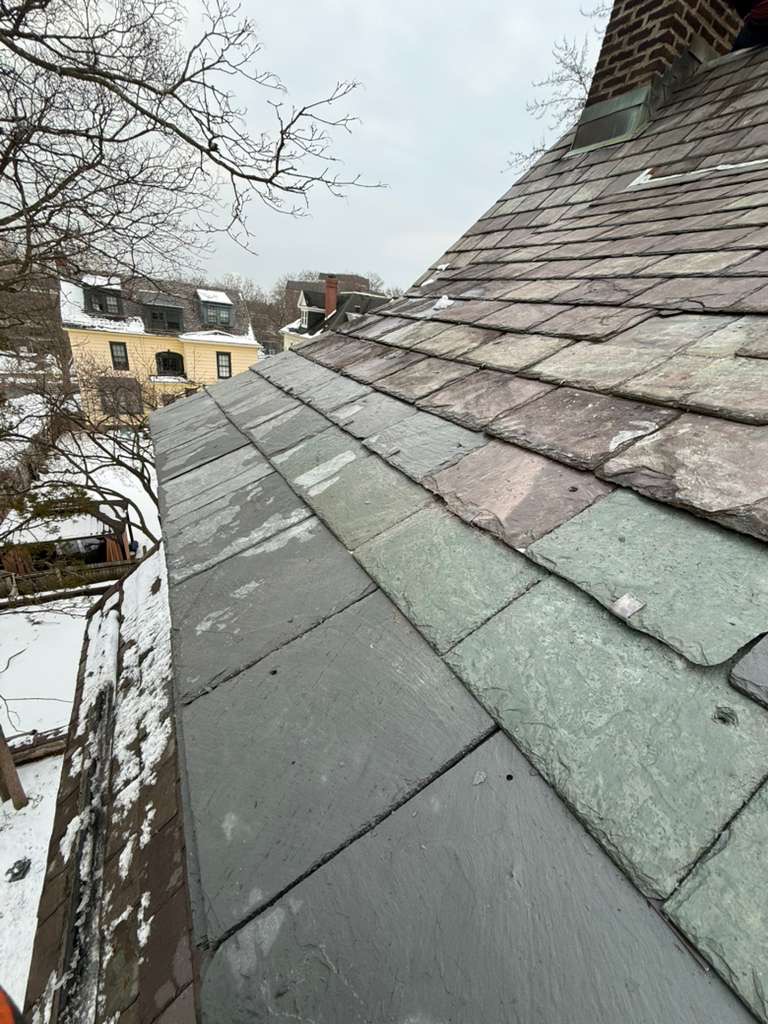
Roof valleys are the channels where two roof slopes meet. They handle a ton of water runoff, which makes them one of the most vulnerable parts of your roof.
In Troy, valleys are especially risky because snow, ice, and debris tend to collect there. If the valley is installed poorly, or if shingles in the valley are worn, water finds its way in fast.
Signs your valley is a problem:
- shingle granules collecting in gutters
- visible cracking or lifting along the valley line
- leaks appearing near interior corners of rooms
A properly built valley is a big deal. A sloppy valley is a future leak—guaranteed.
Poor Attic Ventilation: The Hidden Roof Killer
A roof doesn’t just fail from the outside. It can fail from the inside, too.
When attic ventilation is poor, you get:
- excessive heat buildup in summer (bakes shingles)
- moisture buildup in winter (condensation, mold, wood rot)
- warmer roof surface that increases ice dam formation
In Troy’s climate, an attic should stay close to outdoor temperature in winter. If it’s noticeably warmer up there, you’re feeding the ice dam cycle.
Ventilation issues usually come from:
- blocked soffit vents
- lack of ridge vents
- bathroom fans exhausting into attic (major problem)
- insulation covering intake vents
Fixing ventilation and air sealing isn’t glamorous, but it’s one of the smartest ways to prevent leaks long-term.
DIY Patches and “Quick Fix” Repairs: Why Leaks Keep Coming Back
Many homeowners try to stop leaks with caulk, tar, or roof cement. That might slow things down temporarily, but it often creates bigger issues.
Here’s why:
- patches don’t address the real cause (like flashing failure)
- water finds a new path under the surface
- trapped moisture rots decking and framing
- quick fixes can void warranties or complicate proper repairs later
If you patch a leak and it “goes away,” you didn’t fix it—you just delayed it. The leak is still active somewhere, especially if you didn’t inspect the roof system from the attic side.
The Most Common Leak Warning Signs in Troy Homes
If you catch roof problems early, you can usually avoid major interior damage. Watch for these:
Inside the home
- water stains on ceilings or walls
- paint bubbling or peeling
- musty odor in attic or upstairs rooms
- damp insulation
- dripping around vents or chimney area
On the roof or exterior
- missing, cracked, or curling shingles
- granules in gutters
- exposed nail heads
- rusted flashing
- sagging roofline (serious)
- moss growth (often indicates trapped moisture)
The earlier you act, the cheaper it is. Waiting is how a $300 fix turns into a $6,000 mess.
How to Prevent Roof Leaks in Troy, NY (The Smart Way)
Now let’s talk prevention—real prevention, not wishful thinking.
1) Get a professional roof inspection at the right times
The best times in Troy:
- late fall (before snow/ice season)
- early spring (after winter damage)
A proper inspection checks flashing, penetrations, valleys, shingles, and attic conditions—not just “looking from the ground.”
2) Improve attic air sealing and insulation
If warm air is leaking into the attic, you’re increasing ice dam risk. Focus on:
- sealing attic bypasses (lights, fans, plumbing penetrations)
- improving insulation to recommended levels
- ensuring insulation doesn’t block soffit vents
This can reduce ice dams dramatically.
3) Ensure proper attic ventilation
You need balanced intake and exhaust ventilation. Typical solutions include:
- soffit venting (intake)
- ridge venting (exhaust)
- baffles to keep airflow channels open
Ventilation isn’t optional in Troy—it’s survival.
4) Maintain gutters and downspouts
Do this at minimum:
- clean gutters in late fall
- check downspouts flow away from the foundation
- install gutter guards if your property is tree-heavy (but still inspect them)
5) Address flashing the right way
If the chimney flashing is wrong, stop patching and get it corrected. A good fix includes:
- step flashing integrated with shingles
- counter flashing properly embedded in masonry (not just caulked)
- proper seal details at transitions
Flashing is not the place to cut corners.
6) Replace damaged shingles before they become a leak
If you see a few missing shingles, don’t wait for a storm. Replace them quickly. Small repairs early protect the entire roof system.
7) Upgrade underlayment protections during reroofing
If you’re replacing your roof, insist on:
- ice and water shield at eaves and valleys
- high-quality synthetic underlayment
- proper drip edge installation
A roof isn’t just shingles. The layers under the shingles are what save you when weather turns ugly.
When a Leak Means You Need More Than a Repair
Some leaks are repairable. Others are symptoms of a roof that’s near the end.
You likely need more than a repair if:
- the roof is nearing its expected lifespan
- leaks happen in multiple areas
- decking is soft or rotted
- shingles are failing across large sections
- flashing is repeatedly failing due to design or age
- there’s visible sagging
A roof that’s “always leaking” isn’t unlucky. It’s telling you the system is failing.
What to Do Immediately If Your Troy Roof Starts Leaking
If water is coming in right now:
- Protect the interior first
Move valuables, set buckets, and cover furniture. - Locate the leak path from the attic
Water often travels along rafters before dripping. The stain is not always below the entry point. - Take photos
Useful for insurance and for contractors diagnosing the cause. - Don’t climb on an icy roof
Not worth it. Roof access in winter is dangerous. - Schedule a professional evaluation
Temporary interior mitigation is fine, but the roof needs a real fix.
Frequently Asked Questions About Roof Leaks in Troy, NY
Why does my roof leak only when it snows?
That’s classic ice dam behavior. Meltwater backs up under shingles and enters the roof system.
Why does my ceiling stain get bigger after every storm?
Because the leak is active and expanding. Wet materials rot, gaps widen, and water finds easier routes.
Can I just seal the leak with caulk?
You can try, but it’s usually temporary. Most leaks are caused by flashing, underlayment failures, or structural gaps that caulk won’t solve.
Are roof leaks always obvious?
No. Many leaks start in the attic insulation and only show inside after significant moisture buildup.
Troy Roof Leaks Are Common—But They’re Not Inevitable
Troy, NY homeowners struggle with roof leaks because the local conditions are rough: freeze-thaw cycles, heavy snow, ice dams, wind-driven rain, and older roof designs all work together to exploit weak points. But here’s the key: most leaks don’t come out of nowhere. They build up over time—starting small, then getting worse with every season.
If you want to avoid leaks, focus on what actually matters: flashing integrity, attic ventilation, insulation, gutter maintenance, and proactive inspections. Don’t wait for stains on your ceiling to tell you something’s wrong. By then, your roof has been failing for a while.
Handle the weak points early, and your roof will stop being a constant source of stress—especially during Troy’s unpredictable winters.